Waste from Electrical and Electronic Equipment, often shortened to WEEE or e-waste, is one of the fastest growing solid waste streams in the world. Including phones, computers, household appliances, and medical devices, WEEE contains a complex mixture of materials, some of which are hazardous.
Get Inspired
AREAS OF ACTION
From food waste to e-waste, EWWR actions cover all kinds of areas. Discover the annual thematic focus of the campaign and learn more about different waste streams, product categories, urgent challenges, and approaches to solve them.
Since 2013, each edition of the European Week for Waste Reduction has been organised with an annual thematic focus. Although it is never mandatory, the EWWR encourages actions to address the year’s theme. This targeted effort by EWWR action developers has fostered a wealth of knowledge about the problems facing different waste streams, and a trove of experience on reducing waste in several specific areas of action.
Click on the topics below to learn more about the EWWR’s areas of action so far and discover inspiring actions that you could organise to address them!


THEORETICAL FRAMEWORK
Today, we understand circular economy as much more than just 3 “R”s (Reduce, Reuse, Recycle). A more coherent framework is the “10R” paradigm, where each listed strategy is more effective than the next:
- Rinunciare
- Ripensare
- Ridurre
- Riutilizzare
- Riparare
- Rinnovare
- Rifabbricare
- Ridestinare
- Riciclare
- Rot/Recover
Learn more about these waste prevention/management strategies and how the EWWR promotes them.
Waste prevention starts long before something becomes waste. It starts with the choices we make about what we buy, how we use products, how long we keep them and what we do with them when we no longer need them.
The 2008 Waste Framework Directive of the European Union established basic concepts related to waste management, including definitions of waste, recycling, and recovery, as well as the theoretical framework of the waste hierarchy. This system ranks waste management strategies from the most to the least environmentally favourable, with the most effective strategies at the top.
The European Week for Waste Reduction puts waste prevention at the heart of the waste hierarchy. The familiar 3 “R” strategies — Reduce, Reuse, Recycle — provide a simple starting point. But preventing waste requires us to look beyond these three actions and rethink the entire way we produce, consume and use resources.
The 10 Rs: a better framework to prevent waste
The 10 Rs of the circular economy help us explore the many ways of keeping products and materials in use for longer, while reducing the need for new resources. In order of preferability (highest to lowest), these are: Refuse, Rethink, Reduce, Reuse, Repair, Refurbish, Remanufacture, Repurpose, Recycle, Rot/Recover, they invite us to ask a more fundamental question: “Do we need to consume this resource in the first place and, if we do, how can we keep its value for as long as possible?”
The higher the R, the more we prioritise the prevention of material waste in the first place. By reducing waste, higher R strategies are therefore better at preserving the value of material resources and products, whereas lower R strategies lose more value. This demonstrates the marriage of economic and environmental benefits within a circular economy and invites us to always consider whether higher R strategies can be achieved.
R0 – Refuse
Before purchasing or using something, pause and question the need. Can you refuse the product itself or its packaging? Can you make them redundant by using something else entirely? For example, do my vegetables have to be packed in plastic again or can’t we leave it out and thus save resources completely?
R1 – Rethink
Rethink how you fulfil your needs – can you borrow or share a product instead of buying your own? Renting and product-as-a-service models are an important way to conserve resources.
R2 – Reduce
Use fewer resources and generate less waste. Choose durable products, avoid unnecessary packaging and consumption, and make conscious choices about what you really need.
R3 – Reuse
Give products a second, third or tenth life. Choose reusable alternatives to single-use items, buy second-hand, share, swap, donate or pass products on to someone who can use them.
R4 – Repair
Keep products in use for longer. Repair what is broken and keep it maintained so that it can be used again for its original function, while learning skills that many have forgotten.
R5 – Refurbish
Restore and bring an old product back up to date to continue using it. Refurbishing old phones, furniture, or buildings is an important way to extend use while conserving resources.
R6 – Remanufacture
Used but functional parts of an old product can be remanufactured into a new product with the same function and as-new-condition. For example, using certain parts from a used vehicle engine into a new car engine.
R7 – Repurpose
Give products a new function. When something can no longer serve its original purpose, can it be adapted or transformed into something different, instead of becoming waste?
R8 – Recycle
Keep materials in the loop when higher-value options are no longer possible. Recycling is essential for recovering valuable materials to process into new products, materials or substances, but it comes after prevention, reuse and other ways of extending the life of products.
R9 – Rot/Recover
Rot means valorising nutrients through composting and the reprocessing of organic material. However, Recovery refers to the incineration of waste for energy recovery and should only be considered when keeping the product or material in use is no longer feasible. The EWWR does not accept actions on waste incineration.
The EWWR encourages everyone — citizens, educational establishments, public authorities and organisations, businesses and associations — to move up the hierarchy and focus on the actions that prevent waste before it is generated.
Because the best waste
is the one that
never becomes waste
in the first place.
AWARDED ACTIONS
Tens of thousands of actions are registered for the EWWR every year. But only 15 finalists reach the Awards ceremony, and just 5 can be crowned winners!
Discover the catalogue of EWWR Awarded Actions.
2025
Award
|
CATEGORY:
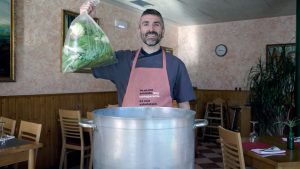
Don’t Hide Myself, I’m Transparent
Implemented by Navarra Waste Consortium.
A campaign that reached around 641 hospitality establishments across multiple municipalities in Navarra to improve waste prevention and separation.
2025
Award
|
CATEGORY: Imprese
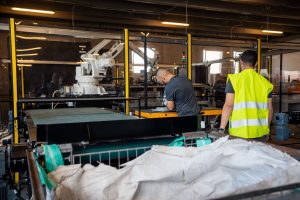
AMSA RAEE-Lab Project
Implemented by A2A S.p.A.
A WEEE treatment facility inside Milan’s Bollate prison that combines circular economy and social inclusion.
2025
Award
|
CATEGORY: Associazioni/ONG
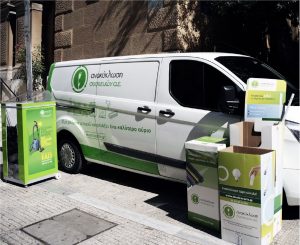
Learn, Act, Live Better
implemented by ELECTROCYCLE.
A nationwide program in Greece focused on education, awareness, and citizen engagement to promote responsible e-waste management.
2025
Award
|
CATEGORY: Scuole
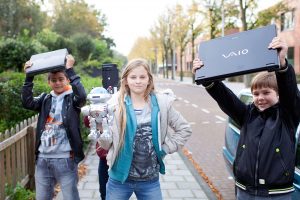
Race Against Waste
Implemented by Race Against Waste.
An educational initiative in the Netherlands that promotes e-waste reduction through prevention, reuse, repair, and recycling.
2025
Award
|
CATEGORY: Cittadini
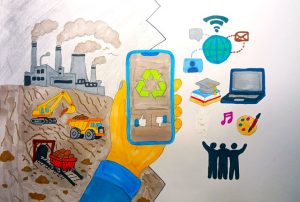
Healthy Planet
Implemented by Edit Mária Bóka.
A tailored methodology developed to support digital literacy by exploring the technical components of mobile phones and the environmental and health impacts of the hazardous substances they contain.
INTERACTIVE ACTIONS LIST
Browse the interactive list of EWWR actions.
One of the best ways to get inspired is to look at past actions from the EWWR! Since our campaign began in 2009, almost 200,000 unique actions have been registered as part of the EWWR – a wealth of experience to draw upon.
With the use of filters by territory, year, and thematic area, you can find the actions that interest you the most. And, once you have registered your own EWWR action, who knows how many people you can inspire?
EXPLORE ACTIONS MAP
Navigate the geographic map of EWWR actions.
If you’re more of a visual person, use our interactive map to locate actions near you – or check out the inspiring actions taking place in other regions!
During the EWWR, we regularly update our map to show actions registered here via our central platform. Note: in September and October, this can take a few days.
MEDIA LIBRARY
These tools may only be used for activities linked to EWWR actions, the EWWR project, or other awareness-raising activities about waste reduction throughout the year.