THE PROBLEM OF
Resíduos de embalagens
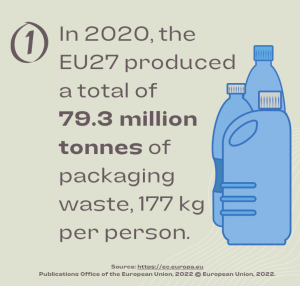
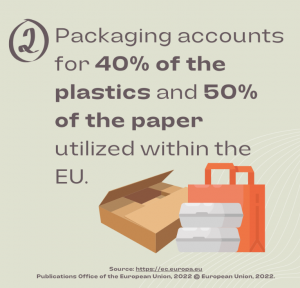
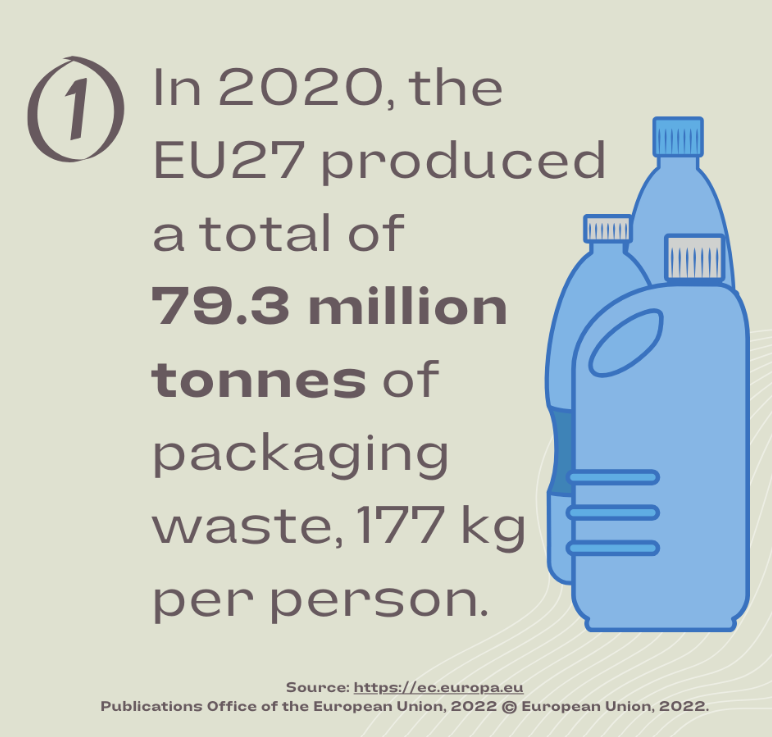
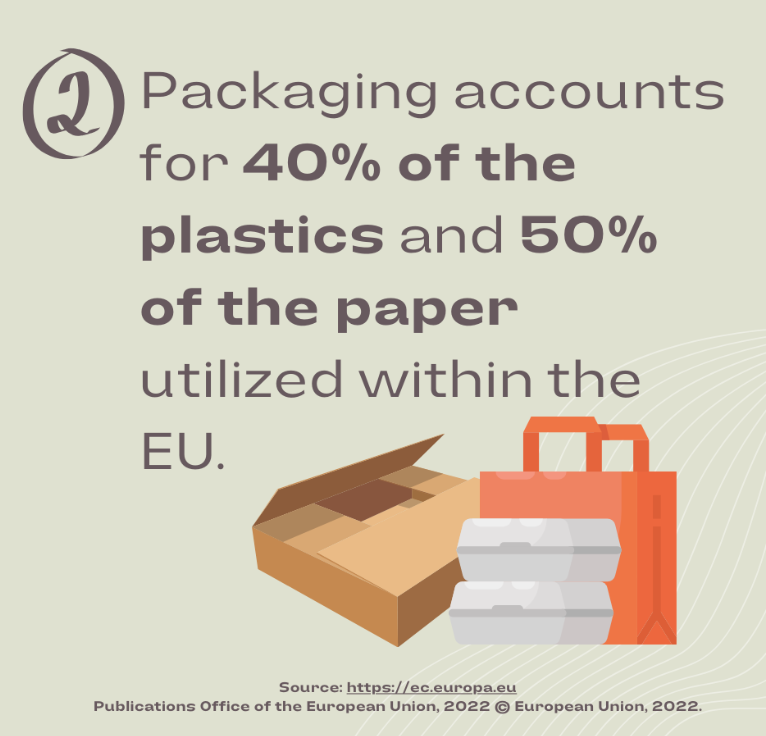
In our everyday life, packaging helps us to contain, protect, transport and even present any kind of goods. It has become present in all the steps of the value chain, from the producer to the consumer. However, packaging has a massive environmental impact. In terms of use of virgin material, 40% of plastics and 50% of paper used in the EU is destined for packaging, while, looking at the final stage of life, it accounts for 36 % of municipal solid waste.
The COVID-19 pandemic might have further enhanced the trend due to more internet sales, more sales in supermarkets for food consumed at home instead of restaurants and more take-away/prepared home delivery of food.
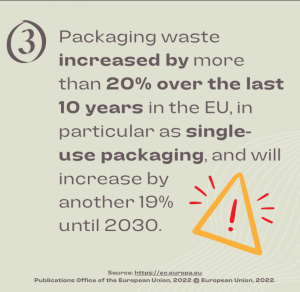
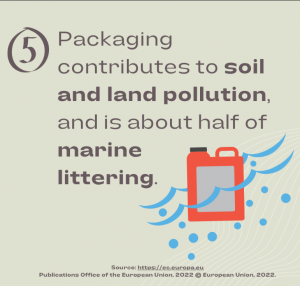
Once packaging becomes waste, it’s sorted between recyclable and unrecyclable packaging waste. From 2012 to 2020, the amount of unrecyclable packaging increased. The situation is even more aggravated by a relevant amount of recyclable waste that, due to the lack of recycling infrastructure and the unprofitability of the recycling process, ends up in landfill, nevertheless. Furthermore, a relevant part is even not collected, and this affects the environment, especially the marine one.
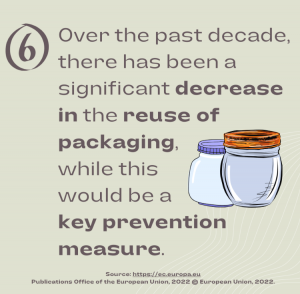
To address this situation, in December 2020, the Commission set the goal that all packaging should be reusable or recyclable in an economically feasible way by 2030 with the scope to reduce packaging, over-packaging, and therefore packaging waste. The role of waste prevention is key to reaching the goal.
Why is prevention key to reducing the environmental impact of packaging?
The environmental impact of packaging varies based on the material. Plastic packaging is the most carbon-intensive material, with a total of 1.8 tonnes of CO2e emitted for the lifecycle of one tonne of plastic packaging. It is followed by paper/board and glass, which have emissions of 809 and 565 kg CO2e per tonne, respectively. Wood packaging has 19 kg CO2e net emissions per tonne (source: Eunomia report December 2021 based on EUROSTAT data). The assessment of the Commission’s Early Warning Reports has revealed so far that plastic is the most challenging packaging waste stream, in terms of recycling. The assessment found that 19 Member States might be at risk of missing the 50% recycling target in 2025. The main reasons for not meeting the recycling targets are the low separate collection rates for plastic packaging waste. This clarifies even more how important is to promote packaging waste prevention since recycling, alone, cannot be an answer.
Why is packaging a relevant sector to move towards a circular economy?
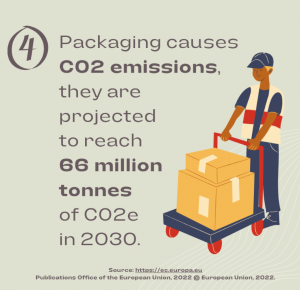
The demand for packaging, together with the low levels of reuse and recyclability, drives the permanent need for non-renewable primary resources. Finally, while the generation of GHG emissions from packaging keeps rising – they are projected to reach 66 million tonnes of CO2e in 2030 – litter from packaging has severe consequences, especially for the marine environment.
Avoiding overpackaging and improving selective collection can strongly reduce the littering phenomenon and increase the quality of the material ready for recycling.
6 key facts about packaging
Learn More
- Rethink Plastic Campaign, an alliance of leading European NGOs, representing thousands of active groups, supporters and citizens in every EU Member State.
- Sustainable alternatives of packaging for food, an article by the Food and Agriculture Organisation of the United Nations
- Sustainability in packaging, an article by McKinsey&Company
- Compostable plastic packaging guidance, by WRAP
 Estabelecimento Educativo
 Cidadão(ões)
 Associação/ONG
 Negócios/Indústria
 Administração/Autoridade Pública
Administração/Autoridade Pública
Give the good example
Use green public procurement to encourage packaging reduction and sustainable packaging alternatives for public services and institutions. Commit to this during the EWWR campaign.
Administração/Autoridade Pública
Education is vital!
Show the commitment of the city to support green projects in the local schools and to involve students in awareness-raising activities to say no to unnecessary packaging
Estabelecimento Educativo
Associação/ONG
Administração/Autoridade Pública
Water bar
The bottled water has become one of the most common imagery for drinking water. However the production and consumption of bottles is having a large impact on our environment due to intensive resource use and waste generation. Drinking water directly from the tap could solve these environmental problems! In the European Union, where there is a history of over 30 years of water policies, tap water intended for human consumption is safe and guaranteed by the Drinking Water Directive, in accordance with the standards set by the World Health Organization. The bad news is that countries such as Italy, Germany and France, where tap water is perfectly drinkable, are among the top consumers of bottled water in Europe and even worldwide For this reason the water bar is an excellent way to show that tap water is as good, if not better, than bottled water. Organising it requires only your wit to pour into glasses different types of bottled water among the glasses with tap water and invite participants to taste, if they can, the difference between them. Making it look like a bar might make it even more attractive!
Negócios/Indústria
Implement a reusable packaging system!
In case in your shop you already have a reusable packaging system, use the EWWR to promote it. If you haven’t implemented this system yet, which better moment than the EWWR? Launch the new system in the last week of November. You could choose to sell your own reusable packaging or simply offer your customers the possibility to bring their own. Another option is to offer a discount to the customers bringing their own reusable packaging (cups or container for take away).
Negócios/Indústria
Share tips with your colleagues!
Start a challenge with your colleagues encouraging them to reduce take away packaging and to bring their own containers and cups at work. Even provide some that they could use if they forget their own sustainable alternative.
Administração/Autoridade Pública
Negócios/Indústria
Make your event zero packaging!
Show your commitment by adopting a sustainable and circular approach in your event. Don’t forget to be ready to manage a relevant quantity of food leftovers. Share it with the colleagues, organise a lunch all together the day after, bring the food to a charity association.
Administração/Autoridade Pública
Associação/ONG
Spread the knowledge
Organise a webinar inviting local associations that are active in promoting circular approaches and solutions. Nothing must be invented from zero, you may just have to look around of you and find the answers. Working in community will help! And what about turning an online event into a in-person walk around the city to discover the circular businesses available? Get inspired by The action of Zero Waste Netherlands on zero waste walk
Estabelecimento Educativo
Schools meet their community
Involve students in an awareness-raising campaign targeting their local community. Organize small sit-in in public spaces to talk with local inhabitants about the impact of packaging and how to reduce packaging waste.
Estabelecimento Educativo
Winter clean-ups
Organize a clean-up in a public park or abandoned area. Analyse the packaging found and let the students use creativity to transform such a horrible waste in a piece of art that will always remind them that packaging must be reduced.
Negócios/Indústria
Associação/ONG
Install a bag swap station in local shops
Invite your costumers to bring any kind of bags to leave them in the station. Other shoppers will be able to use them and then bring them back. The station can be also the best place to provide much more information on sustainable and resource-saving living.
Associação/ONG
Estabelecimento Educativo
Cidadão(ões)
Launch a #WhyOverPackaging Challenge
Use social media to invite your followers and friends, or challenge the students of your class and school, in joining a challenge aiming at raising awareness about over-packaging and its environmental impact. Post a photo of a product with unnecessary packaging and use the hashtag.
Estabelecimento Educativo
Cidadão(ões)
Record your packaging
By using the EWWR packaging diary, organize an activity with a group of students to track the packaging waste produced over a week. The activity goes beyond data recording encouraging to reflect on solutions to reduce the quantities and improve waste reduction performances.
Download the packaging diary in different languages
Cidadão(ões)
Speak up!
Share your concerns about the amount of packaging around you on social media, on radio, newspaper. Demand for change at your local political institutions.
Cidadão(ões)
The less the merrier
Challenge your friends to cook a meal for a dinner buying as less as possible packed products. Ask everyone to take pictures of their shopping and select the winner. The prize? Well, a nice dinner with your friends is never a bad idea.
Inspire you next action
Cidadão(ões)
Estabelecimento Educativo
Associação/ONG
Negócios/Indústria
Administração/Autoridade Pública